How the World Works; or, A Discourse on Fake News
Date: 2020-05-11
Source: https://craigwright.net/blog/bitcoin-blockchain-tech/how-the-world-works-or-a-discourse-on-fake-news
In the Bitcoin and “cryptocurrency”
space, and I use the term cryptocurrency loosely as practically none of
the other systems has any use as a currency let alone cash system, Google has
finally stepped up. I say “finally” because it has taken many years for them to
act on what is a legal requirement, and even now, they are only just doing the
bare minimum.
The other day, there was a purported Forbes article. I say “purported” as it was posted by one of the Forbes contributors. Such are traditionally unpaid bloggers that bring advertising revenue to Forbes. In effect, Forbes is willing to dilute its brand to gain advertising profit. Here lies part of why I invented Bitcoin. The ad-based model is destroying the world; it is allowing for such types of flimflam-based, illegal promotion, and it is only now that people are starting to act.
What we are looking at here is an investment
fraud. Bitcoin is property, and when it is being used in certain speculative
gambling systems, it is being traded on a commodity market and being pumped and
manipulated by people who are basically criminals. It is a huge market, with lots
of people ripping many individuals off. It is not uncommon to find people who
are gullible. In doing so, such scumbags perform fake technical analysis designed
to promote sales decisions on assets, without any real evidence or process or
basis in reality. Right now, CoreCoin (falsely called Bitcoin), BTC, is not
used as cash. It is but a speculative asset.
*NASAA: Top
Investor Threats. 2012*
[*The offer of
securities by an individual without a valid securities license should be a red
alert for investors. Con artists also try to bypass stringent state
registration requirements to pitch unregistered investments with a promise of
“limited or no risk” and high returns*](https://www.nasaa.org/3752/top-investor-threats/)
Part of the problem is that conmen are being
paid by conmen, shilling investments without a license or any knowledge of what
they are actually selling, while trying to pitch you into buying and selling
investments without explaining the risk. And then, people read the now delusive
brand header, and think that a contributor is really a journalist. Forbes says,
“Opinions expressed by Forbes Contributors are their own.” The
reason for saying so is simple: such people are bloggers without journalistic
training or any responsibility. When you are reading the writings of such
contributors, you are not reading articles from journalists. You are reading a
private blog that has no link or real association to and doesn’t undergo
validation or editing by Forbes.
Forbes, of course, has [real
journalists](https://www.forbes.com/sites/lisettevoytko/2020/05/07/us-coronavirus-outbreak-likely-spread-from-new-york-city-research-indicates/#ee83f2961527), too.
When you see an article and the small print says Forbes staff, you will also notice that, unlike with contributors, there is no disclaimer distancing Forbes from the expressed opinion. Forbes staff are journalists. The contributors are amateur bloggers who, until recently, had not even earned a single cent from Forbes and in fact posted to gain advertising and promotional revenue.
In the past, papers and media outlets would separate journalistic contributions from letters to the editor, which we now call contributions, too. Today, many of the media outlets allow for the dilution of their brand, selling their proverbial soul to fake news. As in the example above, certain contributors earn money by writing paid, promotional pieces. They are not news; they are, in themselves, a form of advertising and lobbying effort. Interestingly enough, there are some without any link, which would be required, revealing the source of their funding.
Not too long ago, Forbes engaged in what it
called a shakeup, to add a patina of seeming
truth and integrity. Forbes, for instance, has now started paying its
contributors at least USD250 every month—an amount that hardly inspires
confidence in journalistic integrity. The fact is, such burnishing of the truth
does nothing to create integrity in journalism. It is merely adding a gloss to
a turd that is fake news.
[*Ponzi Schemes: The
premise is simple: pay early investors with money raised from later investors.
The only people certain to make money are the promoters who set the Ponzi in
motion. *](https://www.nasaa.org/3752/top-investor-threats/)
A Ponzi is what any system that promises
money without delivering value happens to be. The promoters of Bitcoin Core (BTC)
and other coin spruikers want you to believe that BTC and all of the other “crypto
assets” will continue to appreciate in value indefinitely. They try and
tell you that BTC is about to “moon”. They say that it is an asset that has
been increasing in value by millions of per cent and that it will never end. Irrational
exuberance always comes to a sudden end. Systems such as the BTC network, which
is intentionally limited in nature, form a poor asset. To work, Bitcoin needs
to scale towards the level of millions of transactions a second. As myself and
my team have demonstrated, it can be achieved, and with my original version of Bitcoin,
it will be achieved.
BTC, on the other hand, is a speculative
good. It has no use; it has merely a false narrative that appeals to dumb criminals
who do not understand that Bitcoin is easily traced and, as government starts
to understand it, easily taxed.
Securities and investment fraud applies to
commodities and other financial instruments. Promoting ‘cryptocurrencies’ based
on puffery and speculation is a form of securities fraud. It is a deceptive
practice designed to induce investors into making sales and transactions for an
item that they would not normally buy. The scenario is different from holding coins
(bitcoin) or related assets for use. Using bitcoin as cash is not the same as
spruiking it to cause the price to rise. Such fraud also includes stock
manipulation, misstatements, and making claims that cannot be backed up by
evidence. It includes front-running and other illegal acts that are rampant on
exchanges—sorry, illegal bucket shops—such as Binance, designed purely as facilities
for money laundering and tricking ignorant investors into becoming a digital-money
mule.
Long-term conmen and criminals such as John
McAfee are long-term promoters of pump-and-dump schemes. They use chat rooms,
forums, systems like Telegram, and anything else they can get to induce misinformed
investors to buy assets, causing a sudden spike in the prices of assets that
the spruiker holds. The low liquidity of many ‘crypto assets’ makes them
analogous to thinly traded stocks. Here, fraudsters promote false information,
and talk about pumps and dumps in the price based on nothing more than the
unscientific flimflam that is technical analysis. In other words, without any
real information, such fraudsters use YouTube videos and social media to pump a
price and then talk about the squiggly lines and how it will end in a sudden
collapse that will then build the price, again. All they are really doing is
using the lack of liquidity to create artificial volatility that they can
exploit. Importantly, they generally do the opposite of what they tell their
rubes—sorry, investors—to do.
Such kinds of conmen, flimflam artists, and fraudsters have no true insight, but rather employ fake-news media—in light of the public’s lack of awareness between the journalists who act as staff and the contributors who are really funded by conmen. There is a lot of money in doing so. And some of the money pays bloggers who act as contributors to sites and magazines that used to be trustworthy, such as Forbes. And I say “used to be” because there is little that distinguishes a journalist among their staff from the armies of paid shills acting as contributors. Most people do not know the difference. In diluting their brand, they have created a wave of fake news that is detrimental to us all.
So, Google has started shadow banning certain
sites and content on YouTube. Some of the other media have started, too. It is
about time, but it is far from enough. Even Forbes is allowing such people to
promote false stories with impunity. The reason for doing so is simple:
incentives.
Such contributors pose as journalists. They
are anything but journalists. They do not have the training, and they do not
have the integrity. Whether it is intentional or not, the result remains the
same. As they are incentivised not by Forbes but by creators of commodity Ponzi
schemes and spruikers committing security fraud, the lack of oversight and
review leaves such fake journalists to shill for their criminal bosses. They
are effectively bosses because contributors are paid to write such articles.
They are funded by the bucket-shop organisations that call themselves
exchanges. They are funded by the criminal spruikers that seek to defraud
people of their pensions. They are the scum that is paid by scum, and they are
proud of it in many cases, because they earn a pay cheque as they help others
to manipulate people and defraud them of their hard-earned money.

They say Bitcoin is valuable because it is a
system that cannot be censored and that nodes will ensure the integrity of
their criminal activities. The truth of the matter is completely different.
Conmen and criminals who embezzled money from their own exchanges, as it occurred
when Mt. Gox was reputedly hacked using a malleability attack, promote lies
about the functioning and working and operation of Bitcoin, because if the
truth was out there, it would be known that both they and you were duped. For
instance, a common fake-news blog that has been put forward (and likely paid)
in the promotion of such false information shows the misinformation about mining
nodes and ‘relay nodes’ and ‘Sybil nodes’, aiming to enable all of the criminal
activity to continue.
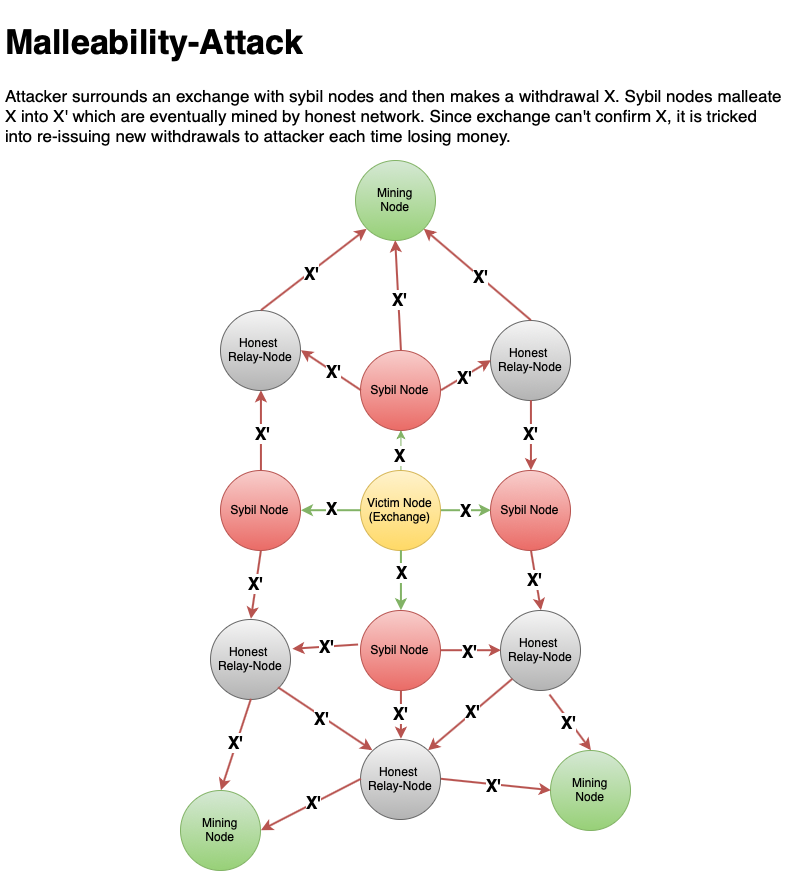
In the image and post linked below, we see
one of the continuing justifications that have been used over and over to say that
malleability presents an attack in Bitcoin.
[](https://medium.com/@herman_10687/malleability-attack-why-it-matters-7b5f59fb99a4)
*[The
lie of transaction malleability as an attack.](https://medium.com/@herman_10687/malleability-attack-why-it-matters-7b5f59fb99a4)***
Transaction malleability only became an issue because of Mt. Gox. The people responsible for the embezzlement of money through the former bucket-shop exchange, that had been cited many times for money-laundering offences, leading to seizures by the American government, knew that they would not be able to continue, and as the principle of the organisation found an out, he embezzled the assets of the company. In part, he and others, who worked with him (of whom many are behind Bitcoin Core even today), created a false tale of how Bitcoin works to deceive those without the knowledge to understand the system. Rather than thinking for themselves or, better still, taking the time to understand the system, they took the deceits of showing a mesh-based network and, even today, continue to promote them.
The simple truth is, there is no such thing
as a ‘relay node’. The sole consensus mechanism in Bitcoin lies in the creating
and publishing of valid blocks. I defined it well in section 5 of my white paper.
Both Sybils and honest nodes, miners, must necessarily create blocks. As I
demonstrate in the diagram below, the connectivity between Bitcoin systems is
nothing like the one shown in the diagram above. Even now, people do not
question any of the matter, because they are paid by the criminals, and when
you are being paid by criminals, it does not pay to think. It pays even less to
question.
In the Bitcoin network, each node is seeded
starting with at least eight edges.
For simplicity, I have replicated the
entire number of Sybils and other ‘nodes’ or actors you may find in the
falsified story shown above.
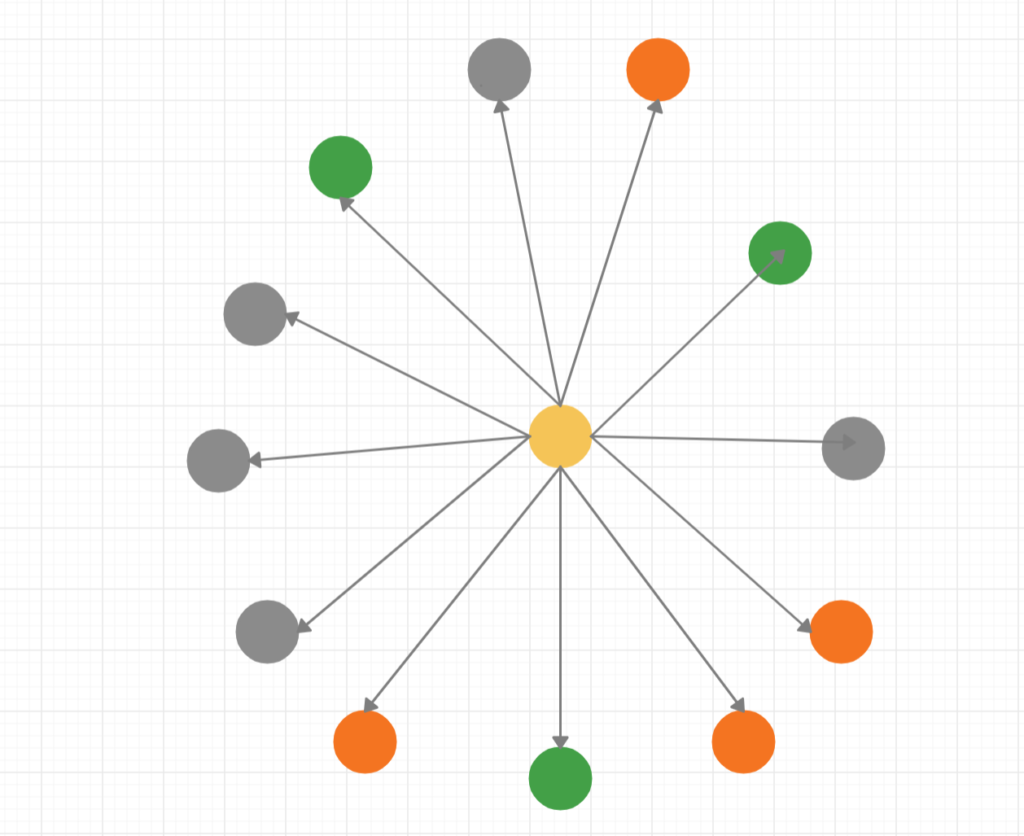
The truth of how Bitcoin works is simple: the sending system, in step 1, transmits to every system it is connected to. If it is a merchant system, including an exchange, it will be connected to hundreds or thousands of other machines. It will likely be directly connected to every node on the network—not every user, every node. If it is a commercial system, such as Mt. Gox, in the first hop, every single connected miner or node will receive the unaltered transaction. Large exchanges, such as Coinbase, maintain connectivity to over 5000 systems at any time. They are economically incentivised to do so. Consequently, the so-called ‘Sybil nodes’ only come to know about the transaction at the instant that the Bitcoin miners or nodes have been informed of it. All of the Bitcoin nodes (aka miners) are densely connected, forming what is known in network and graph theory as a giant node. There is no place for ‘relay nodes’ in the system. Bitcoin is not even close to forming a mesh.
To become a mesh, the system would need to be
less robust: it would be necessary to ensure that no system was able to connect
to more than three or four other systems and that there was no way to tell
which system was mining transactions or not. Bitcoin was not designed in such a
way. I was careful in making a system that could not, in fact, be redesigned to
function in such a way.
But, as long as they can get people not to
listen to me, they can spread lies saying Bitcoin is an anti-government,
anarchist system that allows drug money and money laundering. But the lies are
coming to an end. It does not matter that you attacked me; I will not give up.
No matter what the cost, I will not give up. In time, I will make sure that
every criminal involved in the industry is hunted down. I will make sure that every lie is brought to
task. I will not give up until every fraudster in the industry promoting
squiggly lines, as if such give them some insight into the system and allowing
them to dupe people into losing their investment, is taken to task.
Here Is Why I Am Constantly Attacked
Right now, the strategy being used by my
opposition is not to throw mud in hope that it will stick, it is to throw mud
on me faster than it can stick and to keep throwing more and more, hoping that
people will not notice. The hope is simply that nobody notices the constant
barrage of lies.
Mr Ira Kleiman works in the area of search
engine optimisation (SEO). Basically, he has a history of helping to promote
some of the things I’ve been talking about before, allowing uninformed
investors to be duped.
Mr Kleiman fails to tell people that he not
only contacted but nagged the Australian Taxation Office in an attempt to have
them take action. He helped promote stories of a personal investigation by the
(mythical) “criminal investigations unit”.
But such is no news. What you do not know,
though, happens to be something I have not disclosed until now. In part, people
cannot easily attack or strategise against what they do not know. So it is
always good to keep things close—until they are needed. What Mr Kleiman and Mr
Maxwell and all their little cohorts working to help the criminals have failed
to understand is that they do not have all the facts, and as much as they
attack me, I can sit and bide my time. One of the key abilities of a high-functioning
individual with Asperger’s like myself is to separate the emotions we have from
how we act. Other people may stop, I dig in deeper. I bide my time.
There are two key points people do not
really understand at the moment. The first one is that I did not flee Australia
in December 2015, which has been misleadingly reported and regurgitated over
and over, like by a dog lapping up vomit.
The visa stamp below documents my entry at
Heathrow Airport into the UK, on 25th October, 2015.
I am sure that people such as Mr McCormack
will want to run around validating all, and they can. The requirements of my visa
were that I had to move and come to the UK by 24th November, 2015, at the
latest. As you can see from the stamp, I had done so on 25 October. So much for
a sudden flight to the UK to avoid the law. Of course, if you think about it
for a moment, the UK and Australian governments cover a range of extradition
treaties. If I wanted to flee anywhere, it would not be the UK I would flee to.
Then again, many of the people in the industry have been failing to think. I would
like you to start thinking: it does not matter whether you like me, it does not
matter whether you like what I say, it does not matter whether you agree with
me, but I would like you to have thoughts about it and come up with facts—before
you make a decision.

What people fail to think about is that my
ideas have led to over a thousand patent filings. [Research
and development tax credits and offsets](https://www.ato.gov.au/Business/Research-and-development-tax-incentive/In-detail/Fact-sheets/Refundable-and-non-refundable-tax-offsets/) are not available where an organisation’s
aggregated turnover exceeds 20 million Australian dollars. If people had
thought for a little bit, they would come to understand that a tax deduction is
not cash in hand. A tax deduction allows you to legitimately sell an
appreciating asset (such as bitcoin) without suffering an undue loss. In other
words, you could sell 1000 bitcoin, use the tax offset, and gain the full
benefit of selling the bitcoin. Unlike most people, I have been claiming and
filing and documenting my assets and the assets in my companies since 2009, which
include bitcoin.
I was ignorant enough, in 2013, to believe
that with a Bitcoin company employing over 50 people (primarily developers), I
would be able to remain secret. Unfortunately, some of them, including a former
accountant and CFO, thought that they could get away with taking money that I
owned. They thought that if they forced some of my companies into liquidation, they
could get assets from me at a fire sale. Mr Jamie Wilson, for instance, in
October 2013, tried to sell assets of intellectual property and bitcoin
belonging to myself and the company to a group in New York. He also forged my
signature multiple times, including in the assignment of certain intellectual
property, that he says I gave to him for free.
Unfortunately for him, Ira Kleiman, and a
few other people who have worked for me in the past, we have had the signatures
and handwriting analysed, and the contracts were not changed or created or
signed by me. For now, I will leave you hanging on whom the result will fall
upon. But I will say that the axe is about to fall hard, and right now, the axe
is in my hand.
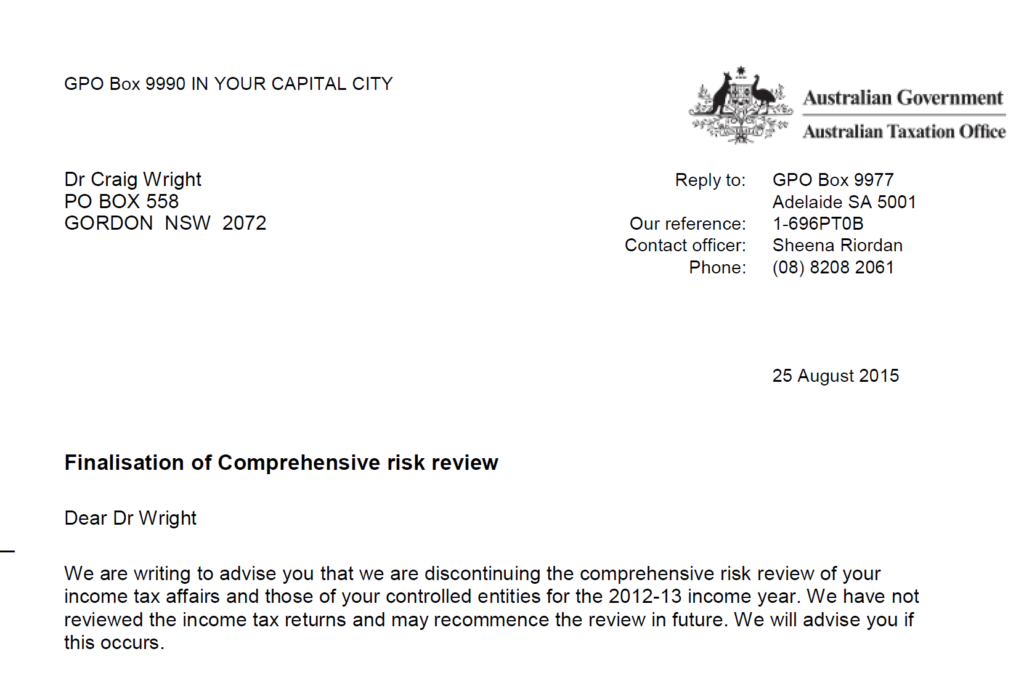
Despite what Mr Kleiman and his lawyers
will try to tell you, certain things did not need to be released; they were not
in the list of documents requested. For instance, nobody asked me for my
personal tax records. If they had done so, they would have seen the letter dated
25th August, 2015, which I am sharing below.
But then, if you are an SEO
“expert” with no real experience and who suddenly comes into money
and funding from some of my detractors and promises of unearned wealth, would
you not lie to the tax office in a foreign country, where you do not think you
will ever get in trouble? Would you not try and promote discontent? Would you
not seek to sow doubt and hope that the person you are attacking does not dodge
the blows fast enough? That the shit you throw comes to stick?
And if you wanted to form a strategy where
you could shake down someone, would it not be in your best interest to make up
stories and inform people from the “Private Groups & High Wealth Individuals”
division of the tax office? You know, such individuals who are tasked with
getting that little bit extra out of people with a lot of money. No criminal
prosecutions, but the standard tax shakedown on business owners and other people
who are [Australian
resident individuals who control a net wealth of over AU$50 million](https://www.ato.gov.au/Business/Privately-owned-and-wealthy-groups/What-you-should-know/About-privately-owned-and-wealthy-groups/).

And yes, I have removed the names of the
compliance officers from the email headers above and below. But you will note
that they are a part of the “Private Groups & High Wealth Individuals” division
of the Australian Taxation Office.
And, if you take the time, you will note
from the report on a lawyer’s website that [I’ve
linked here, each and every individual high-net-worth taxpayer within Australia
is reviewed year after year](https://sladen.com.au/news/2019/12/13/the-new-normal-ato-announces-increasing-review-and-tax-assurance-activity-in-relation-to-private-groups).

When I presented at the Las Vegas
conference in November 2015, the one where I made few friends by making Mr
Szabo look foolish, I had been here in the UK, in London, already. The so-called
raid on my house was a typical case of what people like Mr Maxwell would do. It’s
commonly referred to as swatting.
As explained, I had moved out of my house
and moved to London in October 2015. I did fly back and forth to Australia, but
I was not living in Australia at the time, and I had resigned from all the
Australian companies from July 2015. Nobody seems to ask how Gizmodo just
happened to be stationed and waiting with a full camera crew. Nobody checks
whether the so-called documents were real—I mean the unverified hearsay that is
used to sell a click-bait article, where people suddenly believe it must be
real. Such is the world of advertising-based media.
And next comes a highly staged raid on a
home I used to live in. A bunch of bottom-dwelling “journalists”—if
they can be called so—film everything. Then again, several people who now
purport to never have heard of me and who are or were formally part of Blockstream,
of course, wanted me gone. Mr Maxwell has a long history of setting up swats.
More importantly, Ira and others, who wanted my companies destroyed so that
they could feast like vultures on the carcase that remained, had a common
interest with people like Mr Maxwell, with his history of helping money
launderers and extortionists who would benefit from being paid in bitcoin. One form
of extortion that Mr Maxwell has a long history with involves the organisation
that uses malware to encrypt computer drives, before seeking a payment in
bitcoin for the decryption key. The last thing someone like him would want is a
person like myself teaching law enforcement how to recover such funds and capture
the extortionist.
I guess you could say that Ira Kleiman and
a few others have a common interest. It is part of the reason why a lot of the
funding for Mr Kleiman comes from the bucket-shop, securities-fraud-promoting entities
that call themselves exchanges. With my pushing of regulation across the industry,
none of them want me to be successful.
In December 2015, I was caught off guard. I
lived in ignorant bliss, thinking that nobody I did not know had even the
inkling of a clue that I was the creator of Bitcoin. I could not have been
further from reality in thinking so. It was simple: all the people knew, and
all of them knew that I was a threat. Unfortunately for Mr Kleiman, he is not
smart enough to know when he is being played. So, yes, people have been
breaking into my systems and endeavouring to cause problems for a long time
now. Some problems started as early as in January 2014. My stance on Silk Road
did not help me either. All such websites on the dark web are completely evil.
If I had my way, each of the people on them, developing them, and owning them, for
every day that they were associated with building and promoting such a website,
would be in a Thai prison for a lifetime.
**You see, there are different strategies,
and one of them is, where you have a weak case, do not attack truth, because
you will lose. Attack the man.**
So, the current attack, which is nothing
new, is to say that I have plagiarised everything in my PhD thesis. Along with it
comes the effort to call Charles Sturt University a degree-granting mill.
Neither accusation is anywhere near the truth. I will not address everything in
the fake-news report that the shills used to try to spread and smear mud. I
will just look at one aspect that they seem to have focused on. In doing so, I
may just assuage some of the ignorance surrounding the concept and process of
research.
In a recent hit piece by Mr Gregory Maxwell,
that has links to both the McCormack case here in the UK and the Ira Kleiman
case, we see that in part he has said:
*Sometimes,
Wright even forgot to define terms that he stole from the source material, or
he introduced an equation without including the intermediate steps necessary
for it to make sense.*
You see, one thing that Mr Maxwell, having
never gone to university or learned how to research, doesn’t understand is that
using common terms is not stealing ideas. Oxford University defines plagiarism
as “presenting someone else’s work or ideas as your own, with or without their
consent, by incorporating it into your work without full acknowledgement”.
Here lies the key concept that he does not
seem to understand. Similarly, with many of the patents, where they have
accused me of plagiarism, they do not understand that there is a section on
prior art. When I detail something as simple as a Diffie-Hellman key exchange,
it is not necessary to spell out the fact that it is a standard process by linking
every bit of prior art and every reference. In similar format, it is not
necessary in academic research to explain the origins of something that is
commonly used. Then again, when you paint things in the right manner, without
academic or journalistic integrity, as an anonymous coward that Mr Maxwell has
been for decades, you can skew how people think without having to rely on the truth.
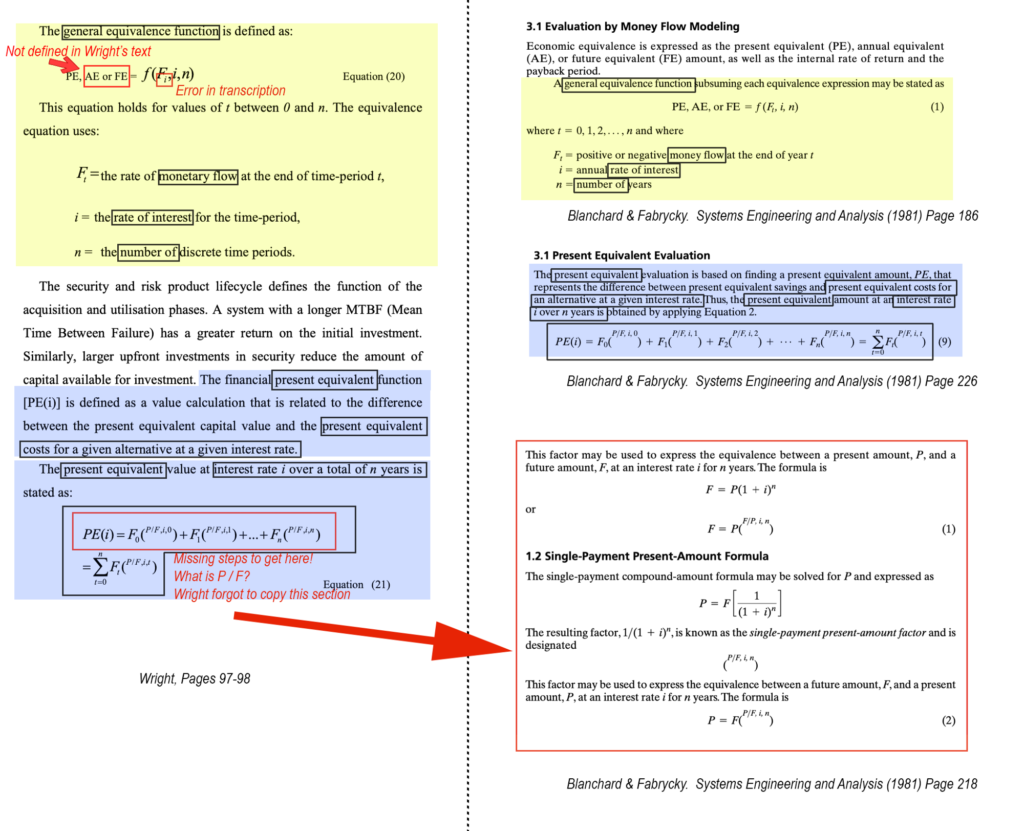
In the first example, shown below, Mr
Maxwell has pulled out a text from Blanchard & Fabrycky (1981) and commented
that I copied the formula without going through the full derivation. It seems
to me that Mr Maxwell fails to understand that calculations of net present values
are a common aspect of system engineering, finance, macroeconomics, and even
accounting. The problem in his definition of plagiarism is, he does not understand
enough to read academic work. He has developed his own little concept of plagiarism
and detection, colouring sections of common terms. But, if he had completed enough
education to understand a term like ‘net present value’, he would see that I am
not claiming to have created the concept of either net present value or mean time
between failure.
So no, I’m not attempting to derive the
formula for the net present value, but I’m merely putting it down. You may ask,
why have I not quoted the text he references? The simple answer here is that
Blanchard & Fabrycky themselves did not derive the present equivalence
function or net present value calculation and formula. So, you could ask, why
have they not referenced it?
Are the authors of such an esteemed textbook
also plagiarists?
The answer is of course no, and if you
understand what the concept means and how a thesis is written, you will quickly
come to understand that the reference is not necessary. It is not necessary to
reference the calculation of a net present value in either my thesis or a
textbook.
And no, I am not just asserting it. We can
pull up literally thousands of websites; all of which utilise the net present
value calculation, such as:
- [Discounted
- Investopeadia;
- [Investopeadia (Interest
- [Investopeadia
- Wikipedia.
Cash Flow and the Time Value of Money](https://www.business-case-analysis.com/discounted-cash-flow.html);
Factor)](https://www.investopedia.com/terms/p/pvif.asp);
and Compound Interest](https://www.investopedia.com/articles/investing/020614/learn-simple-and-compound-interest.asp); or
Maybe we could look at textbooks:
- [Derivatives
Demystified: A Step-by-Step Guide to Forwards, Futures, Swaps and Options,
Second Edition By Andrew M. Chisholm © 2010 John Wiley & Sons, Ltd.](https://onlinelibrary.wiley.com/doi/pdf/10.1002/9781119206675.app1)
The simple truth here is that, in the UK,
every single Russell Group university has material from every single finance
professor using the same words and the same formula. And sometimes, such as
with the particular Cambridge University courseware associated with their MBA,
they do not even give you the equation; they just [assume it,
mention it, and move on](http://www3.eng.cam.ac.uk/~ss248/mba03/Session6/paper.pdf).
So, you see, it is not necessary to derive
every equation used and to refer to every possible source. In fact, if I was to
do so, I would not be referring to Blanchard & Fabrycky. I could, indeed,
honestly say that I don’t know the source of the original net present value
calculation, but I do know that it was published around two centuries before Mr
Maxwell’s cited example. Edmund Halley (1656-1742) was famed for many things,
but one of them was a paper that was finally, posthumously published in 1761: *Of
Compound Interest*. If you read the text, you will find the same formula
based on an annual payment that starts in year one but, unlike my reported
formula, ends at year T. In using “n” to represent the years,
I was not obscuring the source. The formula remains the same whether I use an n or a T.
I have been informed that a work on *Value
of Life Annuities in Proportion to Redeemable Annuities* was produced by one Johan de Wit (1625–1672),
but I have not, at present, had the fortune to read it.
So, like the author of *[Expected
Net Present Value, Expected Net Future Value, and the Ramsey Rule](https://www.tse-fr.eu/sites/default/files/medias/doc/wp/fit/wp_fit_49_2009.pdf)* (Christian
Gollier, 2009) from the Toulouse School of Economics or professors of [Purdue
University](file:///C:/Users/CSW/Downloads/applying-game-theory-and-real-options-to-competitiveness-in-construction-businesses.pdf), I have not decided to reference the history of the net present
value calculation in a thesis that is on a completely different topic.
What, of course, Mr Maxwell wants you to
overlook in his attempt, once again, to discredit me is that my thesis is not
about the net present value, and I further do not define the source of a
Poisson process, but I do define more complex equations that derive from them.
You see, the knowledge of net present value was not the research in my thesis; using
multiple different sources of quantitative algorithms and compiling them
together presents a distinct use that had not been looked at before. But in
putting up a few pages out of context, he hopes to have you not read anything I
have written.
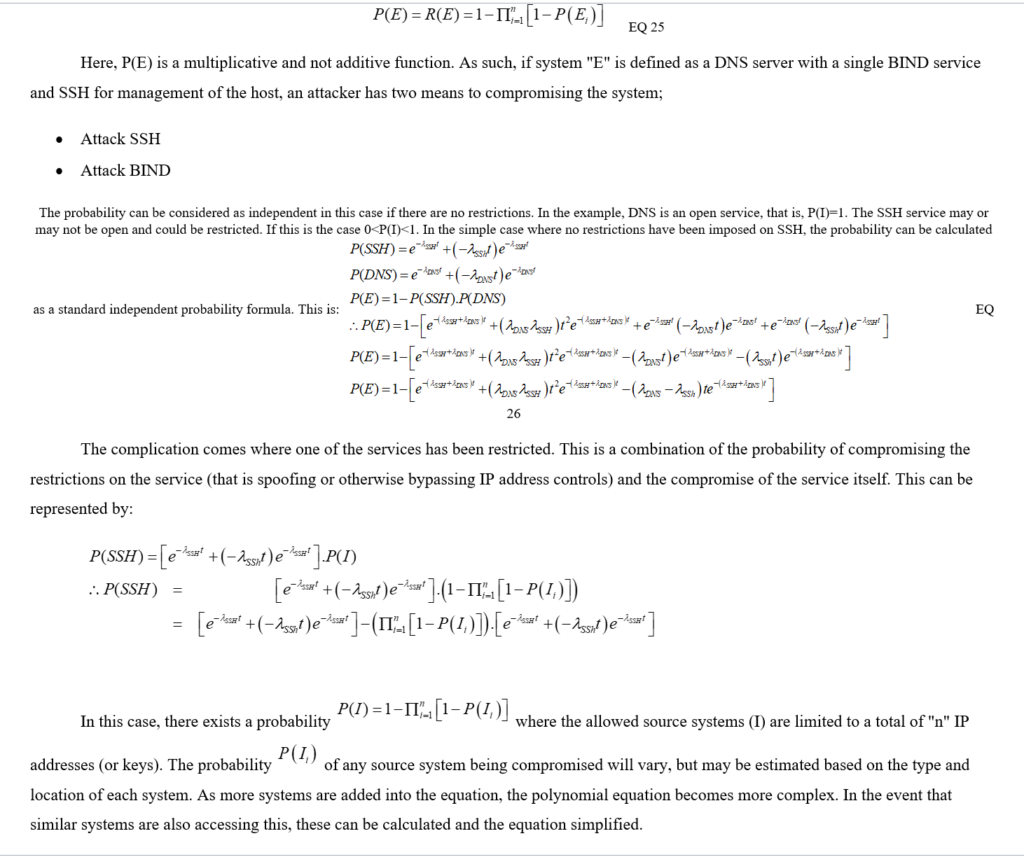
So, the research component of my thesis is
not a simple net present value calculation but rather quantifying the risk
associated with attacks against computer systems. None of it, of course, would
show up outside of my papers, which would be original research and which is what
he wants you to believe I have copied, yet the simple answer is to demonstrate
that I have used common formulas in the base derivation of more complex
formulas.
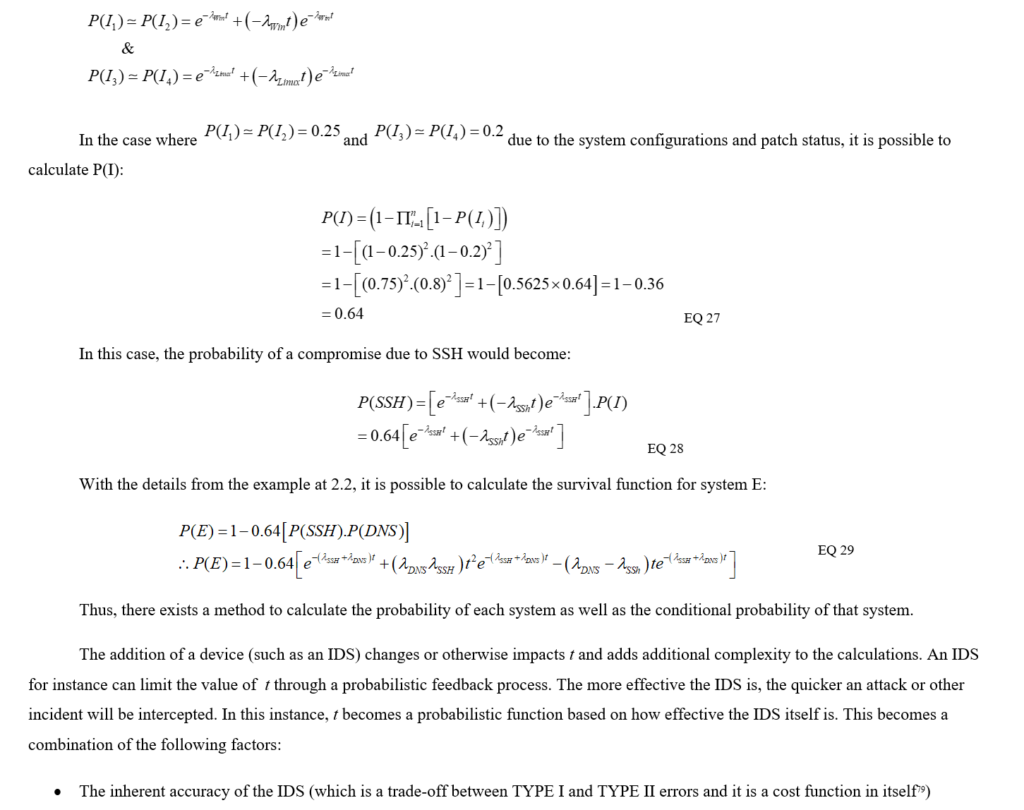
I must apologise to Mr Maxwell, for he seems not smart enough to understand net present value calculations without going through each and every one of the steps. As my thesis was not related to the subject and I was only introducing equations that are common in the industry, I did not think it would be necessary to expound on them further. Besides, when I initially submitted my thesis for examination, on 17th December, 2012, it was, summarily, returned to me without much review—because of its length. I had created a 636-page monster. The first thing that my supervisor, Tanveer Zia, did was to return it to me. Prof Zia and others acted to supervise. The chapter was presented at a conference, which was published as a book.
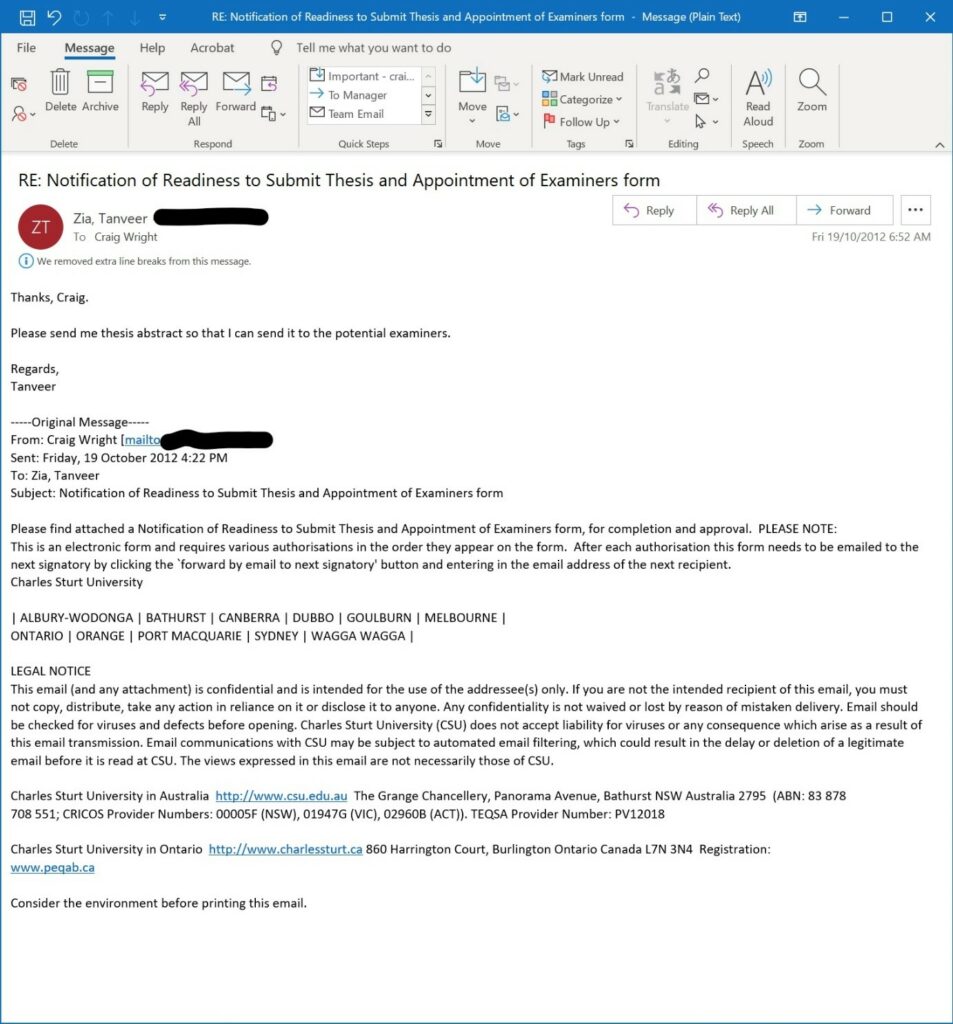
My supervisors and later the university
advisors and even the markers had full access to material that demonstrated knowledge
of net present value calculations. They knew quite well that I was not saying I
had invented them. When cherry-picking, what Mr Maxwell and others are
neglecting is that no source is seeking to cite the origin of everything. To get
into such level of detail, I would have to start citing the origin of the term plus.
Where did basic algebra come from, where did the sigma symbol come from, what
is the history of interest? No, at a certain point, you do not quote ideas as
anything other than given.
Prof Zia reviewed and co-authored the paper,
which ended as the chapter. In many iterations of my changing my oversized
thesis into one within the university’s limits, nobody complained—because
nobody expects people to reference the source of an idea that you are not
claiming to be your own. I say it again: nobody at a university level would
believe that you are saying you are creating net present value calculations by
putting it in a thesis. It is simply the use of a common formula. Then, if you
have never been to university, you will not understand it.
Predator prey games, Jean-Jacques Rousseau’s
18th-century concept of a stag hunt, and many other topics that I have covered
in my thesis may be covered without going into the detail of the source. There
is a simple reason for doing so: the people evaluating it know that it is not
my idea. I am not claiming to have invented a stag hunt; I am using a standard
model. I am not claiming to have invented predator prey games; I am using a standard
model. And no, I was not engaging in a thesis covering the history of game
theory, the history of finance, or the history of engineering, so none of the
common concepts were referenced.
But What about Some of the Graphs?
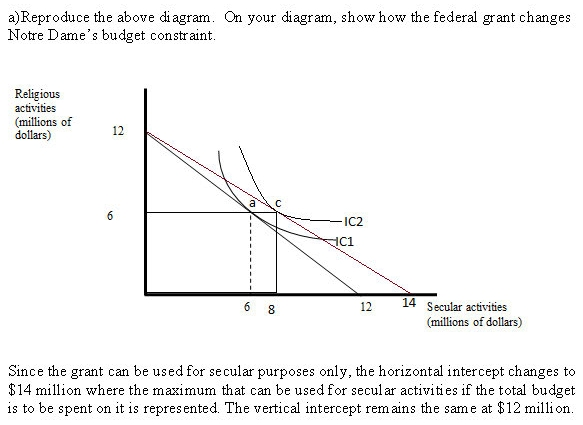
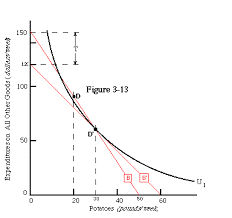
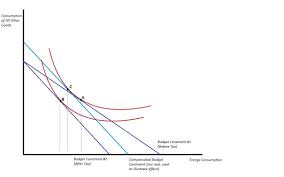
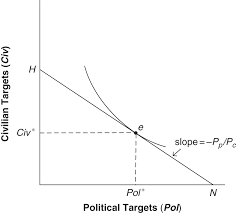
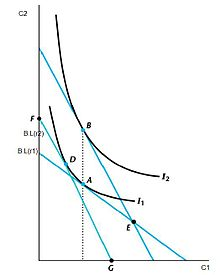
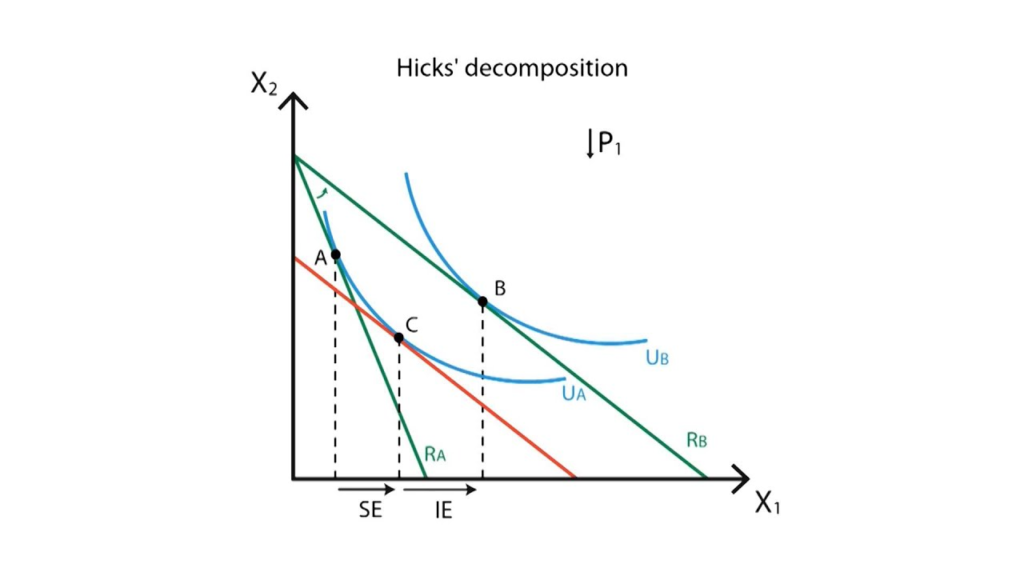
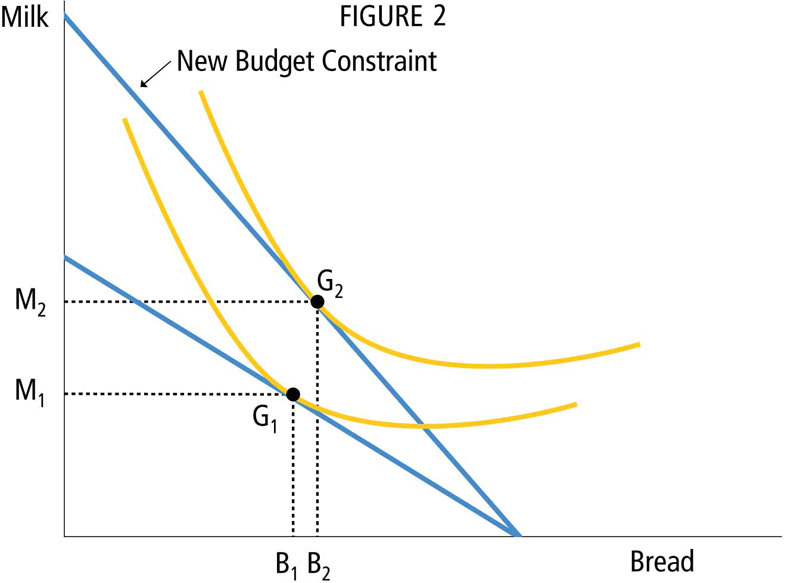
Again, you will find some commonalities
between diagrams. You could argue that the diagrams are very similar to others,
and you would be right in the wrong way. Because whether you are teaching [Consumer
Choice Theory at the University of Queensland](http://www.uq.edu.au/economics/AJEE/docs/Volume%2010,%20Number%202,%202013/2.%20Teaching%20the%20Two-Period%20Consumer%20Choice%20Model%20with%20Excel-Solver%20-%20Jose%20Silva%20&%20Angels%20Xabadia.pdf), or filling out a Wikipedia page, nobody
cites terms that are considered to be common knowledge or references the
history of an idea, outside of the historian writing about the origins of an
idea. You are of course not taking the ideas of another. In not referencing
every author involved in the creation of consumer choice theory, you are
actually finishing a publication. As I explained, not everybody needs to engage
in a historical jaunt every time they want to create a publication.
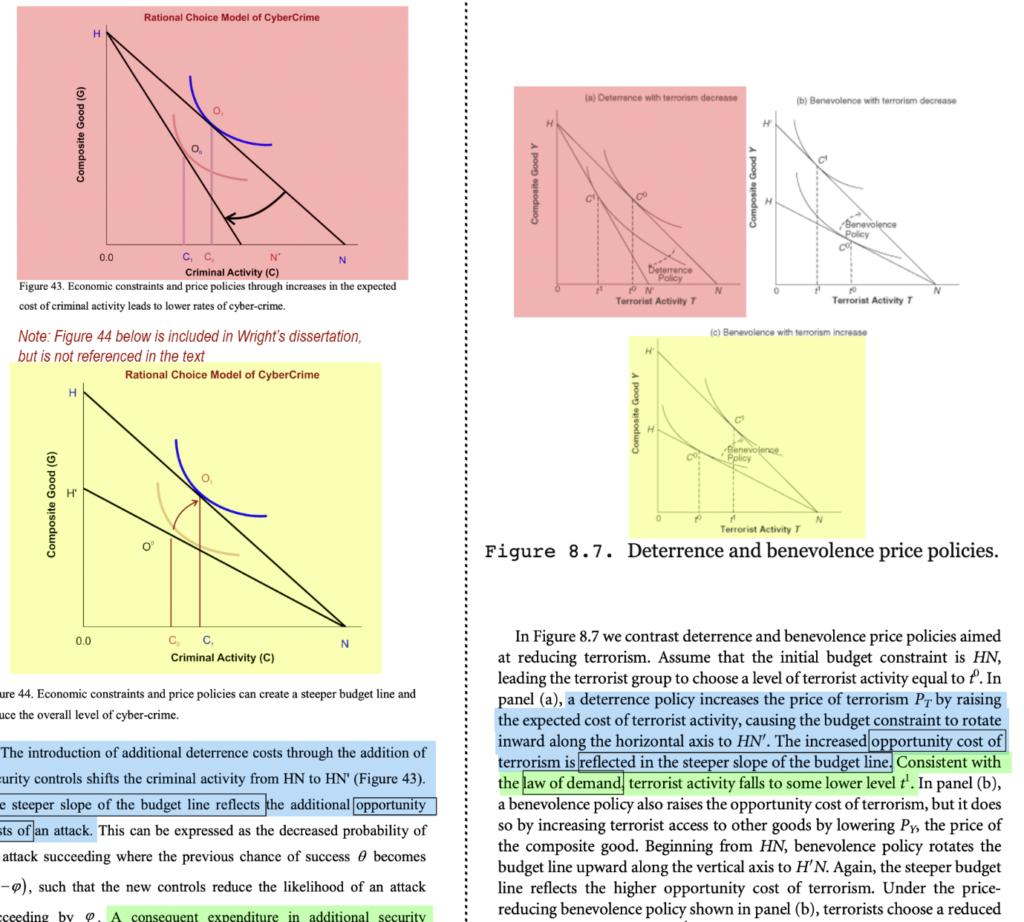
A Google image search will find over 1
million publications containing the same form of diagram, with some diagrams that
are nearly identical to mine, both before and after my publication, and none of
them have a single reference to each other. The reason is simple: none of them
nor mine are stealing an idea and passing it off as their own. None of us are
claiming to have invented consumer choice theory. In fact, consumer choice
theory is a standard part of intermediate microeconomics.
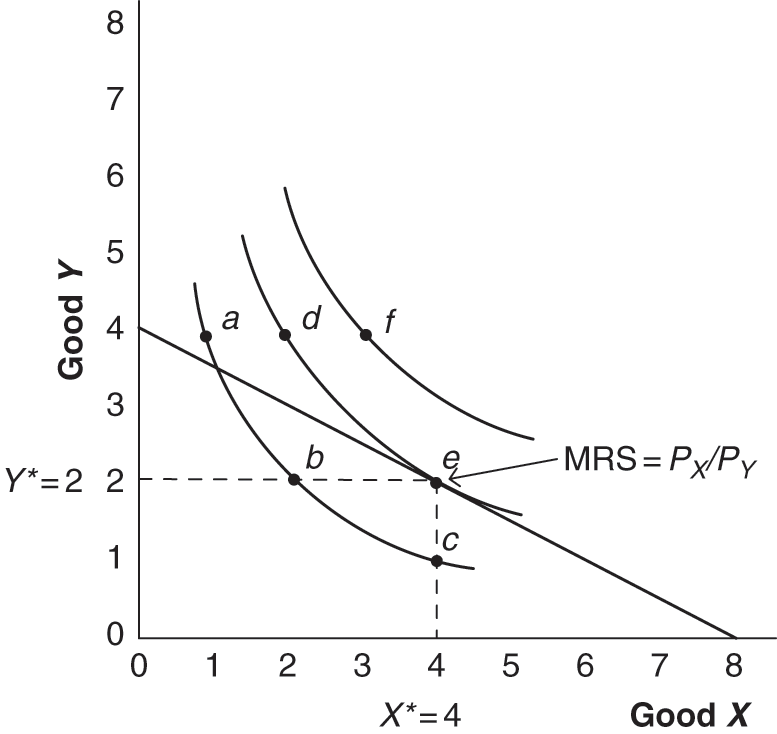
See:
http://sex-drugs-economics.blogspot.com/2016/09/consumer-choice-and-impact-of.html
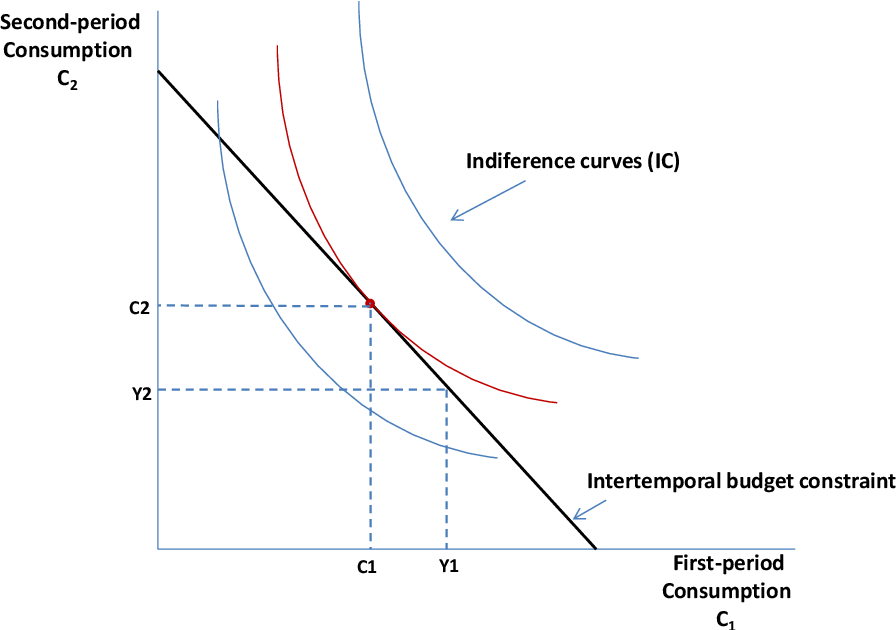
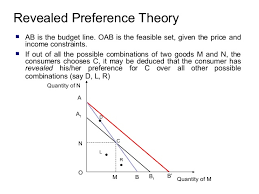
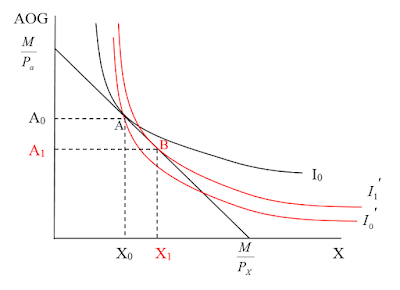
And…
So yes, my diagram is a horrible, ugly
version of the general methodology of consumer choice theory, the same every
single microeconomist uses. My only apology is that I am not a better artist.
But But But…
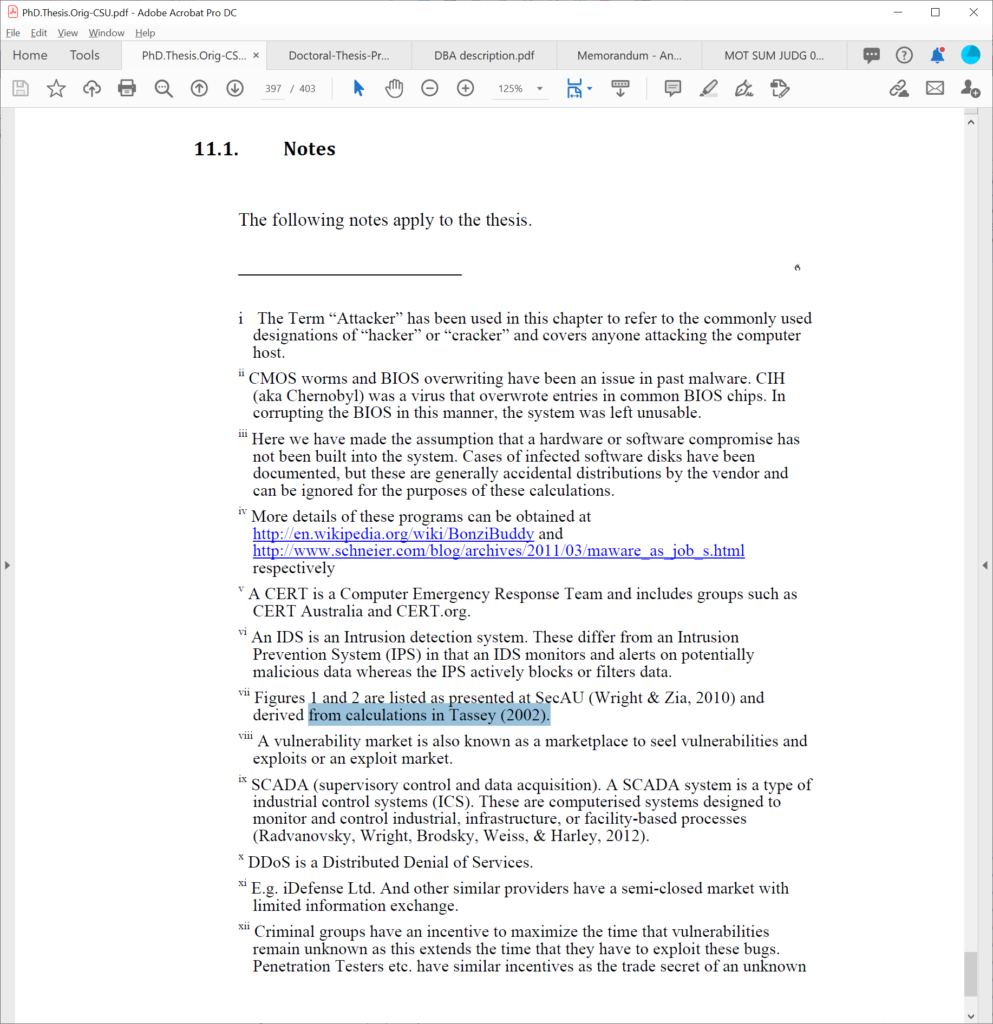
As explained, I had to reduce the size of
my thesis. In my original section of notes, that was then removed, I had a whole
lot of extra material. Some of it included details of the papers I got
calculations from. You could say, they should be in my thesis submission, yet,
I was told to take them out. Both of my supervisors and the head of school and
later the reviewers from other universities, such as the University of
Melbourne, told me that the section was unnecessary and to be removed.
It also means that once you remove the
notes, you remove the references in the notes. You see, in writing a thesis,
you do not throw references in that you do not use. So, when you have a formula,
and you say that you are linking to it, you incorporate it. But when it is not
a part of the text, you do not throw a reference in there to make your
reference section longer.
Charles Sturt University
Mr Maxwell and others may want to denigrate
the universities I have been to and studied at, calling them degree mills. The
simple answer is, they are not. I have been to many institutions of advanced
learning, across Australia, Europe, and even the USA, and Charles Sturt
University is one of the best that I have been to. There is a reason why I did
so many postgraduate qualifications there. Those of the anarchist bent will, of
course, have problems with the university.
Charles Sturt University incorporates the
New South Wales School of Policing Studies. Located in New South Wales,
Australia, it is where we train our police force. The attacks against the university
and where I was studying had started before I was made public in December 2015.
Such a particular hit piece was well-planned. I was simultaneously enrolled in
two postgraduate degrees. The university had allowed it, even though it was
generally against policy; I was given an exception. All my lecturers knew about
it, of course, and I was working there. The scenario did not stop people like
those associated with limiting Bitcoin from growing and their teams of sock
puppets from sending hundreds of complaints about me to the university. To
simplify responding, and to simplify my life at the time, I chose to drop out
of one of my master’s courses, just before I would have graduated. I was not
happy about doing so, but it was not worth the fight. At the time, I thought that
things would just go back to normal, I would just be able to work and study,
and people would go away.
Of course, I was wrong. My existence is an
existential threat to certain people. And I understand now that they are not
going to ever want to go away.
But neither will I.
The irony here is that if the same people
who seek to cripple Bitcoin had left me alone, I would not have come back. I
just wanted to research and study and build. But what I was building threatened
them. What they do not understand is that their attacks, in part, have led me to
where I am now, and it is a position I will not go back from.
Things are about to change. Even as I am
writing now, and as you read the post, there are things in motion that, as you will
see, have already come to occur. Like with my earlier blog, I do not post
everything myself; I write my documents, and hand them off to others. I do not
get paid for them either—not by frauds and conmen pumping Ponzi schemes built
upon my creation and not by other marketing firms.
The Problem Is Advertising and Silicon Valley
Software is not eating the world. Anyone
who believes so is living in a microbubble outside of reality. Software is
changing things, but it is only a part of everything. Yet, if we allow the
current crop of Silicon Valley companies to sell our lives, our privacy, and
everything we do to advertising and tracking firms, we will find our freedom
eroded to it no longer exists. I did not create Bitcoin to take down banks or
to attack governments; I see the greatest use in micropayments and a
methodology of creating a system where people pay for value. Not where they use
click-bait advertising to fund information that is provided by half-rate hacks
presenting themselves as journalists and who are really writing advertising
copy posing as truth, but I see a world where the truth itself has value.
The simple answer to how to beat me is to
create a system that is better. One that scales. One that will provide micropayments
and digital cash the way Bitcoin promised when I invented it. What I am doing
with my company, along with the help of certain other people, is making Bitcoin
all it can be. Then again, creating a system that works is hard. It does not
come instantly, and it does not allow scammy promotions and pumping to try to
get instant wealth. It requires building something that people use. Not because
of ideologies or some false extropian religion, but rather because it is boring
‘plumbing’ that underlies the systems and that people use on a day-to-day basis.
**If we allow our freedom to be eroded, it
will be because we have allowed ourselves to ignore the gradual loss.**
I cannot make you think, but I can ask you
to. When such flimflam men tell you they have knowledge of the system and know
which way prices will go, ask yourself why they are not making lots of money but,
instead, are working to promote flimflam. If their system is so good, why are
they giving away everything they could earn so that you can invest your money
into the sudden wealth that they have altruistically walked away from? It does
not matter whether you like me, it does not matter whether you think I am
honest or dishonest or anything else; I’m not trying to sell you anything. I am
simply trying to get you to think. I know it is a hard task for some people. I
am not promising fast-earned wealth; I am simply telling you that such people
have no idea outside the Ponzi they are creating to take your money. I know it seems
strange in a world of people seeking to grab everything you own, but think for
a moment: would it not be better to investigate the so-called Internet
promotions that promise prices will go up a million times, rather than simply
listening to people who are half the time close to being broke themselves?
And so, again: if the price of bitcoin is
to go up a million times, where does the money come from? There is not enough
cash in the world for bitcoin to increase in price to the level of USD10
million. And if it is not used, and I mean used by billions of people, there is
no reason for the price to hit a hundred thousand dollars. So, if you know that
the game is musical chairs and you are coming in late, why put your money into
a pot that someone else is likely to take?
Extracted Insights (77 total, showing top 10)
+ 67 more insights