On Talking
Date: 2020-09-04
Source: https://craigwright.net/blog/philosophy/on-talking
I have been giving
oral presentations for a long time. The methodology I used in learning the necessary
skill has been far from ideal—jumping into fire rarely leaves you without
scars. So, I do not know that I have a feeling about it any more. It has just
become part of my life. Reflecting on why will not change anything; it
comes down to just becoming better at what I am doing. Every time I speak, I
try to analyse what I said, and how, and how the audience reacted. And over
time, as with every skill, you get better.
Thomas Sowell comes
to mind as one of the better speakers whom I remember. I could also call out
Churchill and even numerous others, whom no one would remember, though they
should be remembered. Sowell has given many good speeches on the topic of
economics and other aspects of public life. One that comes to mind is called *Morality
vs. Sanctimoniousness*.
When it comes to
cringeworthy, excluding politicians, I will move next to Edward Said. Like many
post-modern authors, he has a belief that truth is personal. It is a rather
common belief amongst many post-modern scholars, and it is one that is highly
flawed. Where two individuals have differing opinions, it often becomes
difficult to compare values. At times, some individuals will try to tell you
that there is no truth, or that it is personal. Such an argument is technically
and logically unsound. As with many other forms of post-truth philosophy, it leads
to nihilism. There is little that is more excruciating.
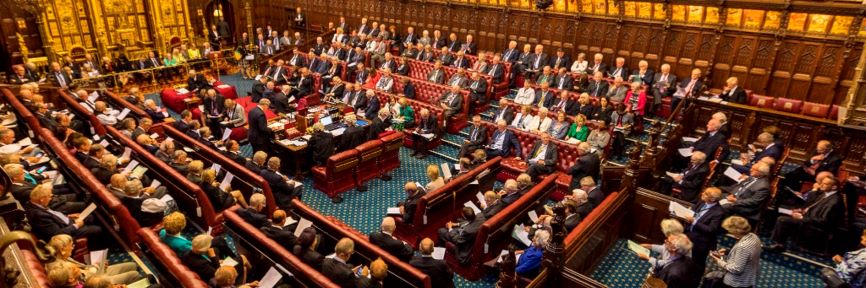
[House of Lords; Greggy1900
/ CC BY-SA (https://creativecommons.org/licenses/by-sa/4.0)]
I honestly cannot remember everything. I remember bad speeches, and I do recollect how I felt. I gave my first public speech more than 30 years ago. Since then, I have given academic presentations and presentations to Parliament, talked to the House of Lords, and much more. I spoke at the invitation of the Oxford Union, and I do remember it well. Yet, it is not my speech that I remember, it is the room, and the people that had been there before, and what they had said as it would resound from the past.
Sowell’s speech was
vital. The socialist and Marxist concept that effort would matter more than
output needs to be addressed, and he did it with tremendous style and grace. In [his
speech](https://www.tsowell.com/spmorali.html#:~:text=Morality%20means%20being%20hard%20on,on%20those%20with%20different%20opinions.), he said:
*The philospher Pascal said that morality included a duty to think
clearly. Clear thinking, in turn, included not confusing effort with
results. If I practice singing as long and as conscientiously as
Pavarotti, I will have as much merit as Pavarotti– but I will still not sing
as well as Pavarotti. What other people can judge, in this case all too
easily, is who sings better. That is all they should try to judge.
Neither my personal effort nor his is known to them.***
We don’t
seem to say it any more, yet it is a message that needs to be repeated over and
over again: it is not the effort that you make; it is the value you create for
others. It does not matter how much labour you expend, but it is the quality of
the output and how much other people value it which matters most. Such sentiment
came as I learnt through trial and error, and so it did when it came to
speaking. It is not what you value, nor even how you think you should say something.
It matters that you provide something of value to others. When you do so, when
you can do so, then you start to become successful.